Send your opinions, pictures or articles to post: sanpasecblog@hotmail.com

School group on Facebook: http://www.new.facebook.com/home.php#/group.php?gid=30642011272&ref=ts

You can also leave your comments in the different posts!

Sunday, May 25, 2008

Living university life


Living on a university campus is an exciting experience for every college student. The variety of people, interest and activities available make campus life very rich, fun and educating. University campuses often offer a wide variety of facilities and services for the students and teachers living and working there. I could experience this amazing new world in the summer at Florida International University (F.I.U.) in Miami, and I surprisingly discovered many benefits and people that made my experience incredible.In the first place, I was extremely impressed by this new world with a wide variety of people living, studying and working on campus. People of different ages, gender, countries, religions, cultures and backgrounds were all mixed up in this intellectual environment. I was able to share with people from all around the globe in my English classes; I had classmates from Lebanon, Puerto Rico, Venezuela, China, Korea, Russia, Kuwait, France and many other different countries. As I was in communications classes with this people with different nationalities, I learned much about other cultures and ways of living that are totally different from mine. What probably helped me most in understanding others’ points of view, was that i observed that some of the people around me where happy with their own conception of the world, and the fact of being different to others made them even happier, since they were able to look at those who surrounded them with acceptance and respect. Living around so many different people was an enticing experience, as I could learn to be open minded to many different opinions and customs. The intercommunication with this people with such a different perception of the world helped me define myself and my identity.
Living on campus has another great benefit: being in contact with people with a lot of intellectual potential. Universities are often the spot where the most privileged minds can be found. For example, my grammar teacher was multilingual; he could speak six languages perfectly: English, Spanish, French, Italian, German and Portuguese. He was even able to understand a bit of Russian and Japanese. At FIU I looked up information about the schools in the university and the degrees and graduate masters they offered to students, and I read about important people that had studied there and been very successful after graduating. This opened my appetite for learning and extending my horizons.
The huge variety of people on a campus with specific interests, results in the existence of many varied activities, clubs and groups. Sororities are a popular form of organization within universities. There people join to achieve a certain goal and help each member on their way to it. Many clubs can be found on campus: literary group, chess club, math club, among others. Other popular activities available on campus include sports championships (soccer, football, basketball etc.); tango and salsa lessons, religious groups could also be found, where students join to share ideas about religion. There were so many activities on campus and so little time I could only attend to some of them, like the FIU soccer championship, where me and my girlfriends went to cheer up for our classmates’ team.
My recent experience on campus was as fun and enriching as it could possibly be. Not only did I define my identity and personality, but I could also learn to be respectful and open-minded to every opinion. The knowledge and experience I got with so many different people is something invaluable that I am very grateful I could get. The intellectual environment I experienced increased my ambition and desire to always make the most out of every situation. University campus life was the most exciting experience I have ever lived and something I would definitely want to do in the near future.

Monday, May 19, 2008

Creativity is the capacity that allows us to create new things, reach new conclusions and solve problems in original ways. It is the creation of an idea or concept which is new, original, useful and which satisfies the creator and other people. It is the basic principle for the improvement of individual intelligence and for the progress of society, for natural evolution. So this is something essential and natural for us. But, why don’t we develop it or give it the importance it deserves? In my opinion creativity is really necessary and important for society to move forward.

Firstly, by developing creativity we get to know ourselves more. To know what we are good at and in which areas we have more skills. To be original is important nowadays, especially in this society where the majority go to the same places, wear the same clothes, express in the same way and have similar ways of living and where T.V. programmes and the media show the same lifestyle. Society needs people with different interests such as arts, education, technology, laws, public places, money, government and so forth. In this way it can develop and be a better place for everyone. Some specialists say that the most powerful countries in the future will be the ones with a creative class, people who use creativity a lot in their jobs, and it can be used in every job.

To develop creativity is possible, natural and essential. We are all born with a creative capacity which can later be developed or not. Creativity is reached with imagination and fantasy, getting out of routine and conformity and its aim is to create things beyond reality. So everything around us has been a product of creativity: books, TV programmes, political programmes, furniture, fashion, music and even life styles. Everything begins with an idea.

There are many techniques to develop creativity such are: mental maps, brainstorming, creative solution of problems, relaxation, creation through images, theatre and art. Through art, for example, you have to face the blank page. The first times it is uncomfortable and it seems difficult, but after a few times you come up with ideas more naturally and easily. In theatre, you have to put yourself in the role of other person and have to behave and think like them, so you concretely walk in somebody else’s shoes, have another point of view and think in a different way.

Brainstorm

There are different conditions that are needed for creativity to be developed. Firstly, a person needs to have time alone, time to think, to be able to create: studies show that imaginative inspiration is more likely to happen in journeys by train or bus or ... at the bathroom! Places where state of concentration is easily reached and fantasy and imagination can expand. Secondly, acceptance and respect are important, there is a theory that says that three aspects condition creativity: the society, the area or discipline and the creator (person who makes the change). Social groups evaluate the ideas, different kinds of society limit or expand creativity of its members and in this way they develop their identity, their tradition.

The project to develop creativity for a social cause could begin at schools, with education. For example, in other countries, such as U.S.A., schools offer courses such as photography, art, fashion design and theatre, subjects in which creativity can be developed. But in Argentina the education curriculum includes the basic subjects and nothing more. In the case of our school we have more chances to develop our creativity than other Argentinian schools because we have the freedom to do activities such as plays, photography contests, taking part in a Student Council and we also have the possibility to do the IB programme. Through the Student Council we develop creativity organizing activities to pursue all our objectives such as a great recreative school week. And the IB programme makes us independent thinkers. In this way we are not easily cheated or influenced and we are more unique.

To conclude, I believe creativity is really necessary nowadays for us and for our society, so we should begin to develop it and give it the importance it deserves. Also education plays a very important role in this so we, Argentinians, should include it in education curricula so all the people get to know themselves more, make the population more diverse and for our society to be developed.

Girls preparing decoration for a party, one of the activities that school lets us do and in which we can develop creativity


Art classroom at school


Girls from the school dancing

Religions

As globalization grows more and more each day we realize the world gets smaller. We are able to reach places we never thought of in very little time. So does the variety of people we meet each day. Unfortunately not everybody’s tolerance grows as much as this. Provably one of our most commons sorrows comes from dealing with everybody’s judgments. We can find ourselves very lost on today’s society, we are misunderstood, but still we love to play judge on people’s lives. It seems Babel’s tower story is reflected on the daily survival. The story explains the origin of nations, their languages, and displays the Lord's contempt for human pride. Although religions have different interpretations of it, most of them agree the Lord punished humans for their daring by confusing their languages and scattering the people throughout the earth. (Genesis 11:1-9).But it seems we haven’t worked that much on our pride and prejudice. Especially on homogeneous societies some people find really hard to accept others cultures, costume, and even more, religion. But what amazes me even more is the fact many people seem to think talking about this is a great taboo .After the trip I made last summer I feel I should share with everybody my experience and I hopefully it will help my society to grow on values such as tolerance and respect, love and acceptance.
I spent 3 months in San Diego, California a state on the West coast of the United States, along the Ocean. It is known for its varied climate and geography, as well as its diverse population. California has the largest minority population in the United States as well as the largest population of Roman Catholics of any state .A large Protestant and American Jewish community, the largest Muslim community population in the US and a growing Hindu one. The state has more Temples of The Church of Jesus Christ of Latter-day Saints (Mormon) than any state except Utah. But of course I didn’t know any of this; it didn’t seem to be of any relevance before. I already knew the family I was going to stay with; my host mom had spent almost a year at my mom’s house when she was my age. Everyone was very nice and kind to me, I was extremely happy. On the 1st Sunday I went to church with them. They were Christians, not Roman Catholics as me, but I thought it would be nice to go with them anyway. When we got there I was a little shocked, the building was far away from what I would usually call a church, it looked more like a school building. People were divided by ages in different rooms. When I opened the door of the youth group I looked around and thought “This can’t be serious”. The walls were blue, red and white; there were four LCD screens, drums, electric guitars, brightly colored sofas and a pool table. Anyway I sat down and listened to the minister. His speech was some of the most heartwarming and touching words I‘d ever heard. On the way out I told one of the girls sitting next to me that I was Roman Catholic. She looked at me very confused and said “Whoa, Isn’t that were they sit down and stand up all the time?” I didn’t answer anything. Even though I knew she wasn’t trying to me mean I felt offended and hurt. The rest of the day I continued thinking about that question. The fact that people recognized my religion, the one 83% of Argentineans relate to, as a ceremony of standing up and sitting down had shocked me.
Some days later I realized how unfair I had been. Hadn’t I been as prejudiced when I first stepped into that colorful room? I didn’t know much about other religions either so, how could I expect others to know more about mine? After that day I not only left all kind of judgments and prejudice, I also opened myself to new ideas, cultures and religions.
One of my best American friends was Jewish and the other one was Mormon. They both taught me amazing things about their faith with great passion and patience, love and enthusiasm. Their ways of understanding and finding God are very opposite, but no one is to tell who’s right or who’s wrong. They have two of the biggest and purest souls I have ever met and taught me one of my most precious lessons.
No matter what we believe in, we all feel, suffer, cry or laugh. We look for ways to reach happiness and joy. Even if you don’t believe in God or any other superior power, by judging others faith or their ways to search that happiness only keeps as away from having a higher standard in life of whom we want to be. We have to work on our tolerance and open our minds to new ideas. I know I did it and I enjoy every moment of it. I am thankful of diversity, freedom of faiths and thought.

Get to the heart of CSP

Do you feel part of your school? I am proposing the chance you do!! Read the following and give it a try, it would be great if you participate!!
Let me explain myself a little bit more. The idea consists of YOU writing about your after school activities and telling about your feelings while doing this activities. In order to get things organized, you can follow the guidelines suggested below.
The structure will be divided in the following points:
· Introduction: here you will introduce yourself (name, age, and grade) and the kind of activities you practice for example sports.
· Body: when you starting doing this, where and with whom, etc, to mention some examples. How do feel while doing this is the most important part of your text because here is when the real you appears. Your feelings are only yours.
· Conclusion: end the text and write a final idea that sums up your whole text.
· Photograph: it would be nice to include a picture of you while doing your activity.

Remember a lot of people from other countries check out the blog so don't be shy at describing places.
At the end when we have collected lots of information from different students, this section will show the uniqueness of Saint Patrick’s school kids’ identity… Be part of the heart of CSP!!!
Example:

Fun Rugby Fan
My after school activity is rugby. As I live in the city of Yerba Buena, Tucumán, I practice this sport in a club situated in the same city, Tucumán Rugby Club. I started playing this sport at the beginning of 2008 but I’m already very much into it. Well, I suppose that everyone agrees about the roughness of this sport, but there’s something that atracts me in such a strong way, and it is not the fact I like to get hurt. It is the adrenaline of having to run faster than you ever ran before to score THAT try that all the team have worked so intensively hard during the match by tackling 100 Kg opponents. The best feeling is for you to get the chance of scoring the decisive point to win the match. Or maybe it is the responsibility and the commitment this sport demands, because the effort is not only yours, but of all the team members, who train all week as hard as you to play.
There's something about rugby that makes determined me to do this sport for as long as my body allows me.

Name: Fernando López Rubio
Grade: 3rd polimodal
Age: 16 years old

Student Council 2008!

In comparison to the previous years when the Student Council was only conformed by fifth formes, our school’s student council 2008 has changed a lot .The main objective is to make all the students at school take part in it in all aspects-from taking decisions to collaborating in activities.It is also important to create a new atmosphere at school,in which we all know each other and have a great time together-what in my opinion is essential considering we spend seven and a half hours each day at school.And as Ignacio Veron one of the authors of this change who is also the ex president says:
”There’s no change if a few people believe in something different,but if there is a group of people with different opinions and way of thinking working together for something they believe is possible.When this happens we can say that the Project begins...
Why begins?because this Project was thought without an ending.The principal objective is that all the people who take part in it can reach it.For making it possible we need constant renovation of ideas,activities,etc.
We must be protagonists of this change.What this proyect needs is that all the people that take part in it be able to give their personal opinion and have the ability to make these ideas come true.While doing this we can say the project is growing and later as a result we have the project which belongs to everyone...”
He talks about the neccesity of constant renovation and we can see this is happening,Ignacio used to be the president and now Eli is doing that job the same as Guillermo Cáceres who wasn’t part of the Counsil and took Tomás Casanova’s place as publicity secretary.And like this there are more changes taking part all the time.

Last year the school council 2008 organized some great activities for the holidays so we all enjoyed some time together with teachers acting as students and students acting as teachers,games,conversations and dancing. The same as Columbus Day in which a competition of different country stands was organized and we decorated classrooms representing the culture and students acted as native people.And the final activity was the overnight camping at school,close to the end of school to which all the students were invited and atended at least eighty .We stayed up late that night we spent the time acting in skits,chatting and playing games.We all had a great time.In my opinión,these activities were very useful to meet students from all the grades,to show we are all students of the same school and we can have a lot of fun together.
In lots of schools students know each other from the first to the last form only because of the fact of studying in the same institution and this makes the school change a lot,which you can see just by talking to children.And this is what we are looking foward to, we want every student to have a good time atending Saint Patrick’s School.Continuing with activities like the ones we did last year would in my opinion help the Project a lot.The school is also helping-may be without knowing it-by the change they did whith the gym classes that used to be one for each form and now all polimodal has classes together in three different groups acording to the sport each student wants to learn.This new methodology is great because at the same time of having class you can meet students from other forms and the classes are better too!

Talking to Eli Chaila and Javier Merlini they told me how excited they are whith their new jobs as president and vice-president respectively...
"We are really happy because of the great challenge we have in front of us.It is a great responsability but at the same time we now we are not alone in this,there is a lot of people working at this and this makes everything easyer.And other thing that helps us a lot is the fact that we can notice every day,in every reces, all the changes at school since last year when the project began"
This year the Council has set the bar higher.Ignacio emphasized the team spirit of the group.”As we all work together students of all grades will be in charge of organizing Internal Week.This way we want to have a Week in which everybody has a great time”.In my opinion this change of the Student Council was a great idea and it is going very well,we can see lots of changes and huge ones!.We must continue with all the energy we have put in so far!
What do you think about it?Do you have any idea?Let us know!Get involved.Your contribution is important!

Saturday, May 17, 2008

Fast food

DANGEROUSLY DELICIOUS

Nowadays fast food restaurants are trendy in our society as they provide quick, cheap and delicious food, but : it`s good to consume this salty food, with plenty of fat and little protein? In fact it is not, as this can become obesity, a very complex illness that also involves blood pressure, cardiovascular problems, and in some cases also diabetes.
In our society, people are accustomed to go to junk food restaurants as they are cheap and the food is ready almost instantly. But the kind of food they provide is anything but healthy. It has been demostrated that large fries and a large Coca-Cola drink amounts to 1430 calories. A diet of approximately 2000 calories is considered a healthy amount of calories for an entire day, which means that this kind of food provides almost what we need daily.
Nowadays in Argentina the amount of fast food restaurants has increased a lot which means that also peolple`s eating habits are worse than ever. The most common dishes that Argentinians consume are pizzas, hot dogs, milanesa, sandwiches, and also the classic burguer. In our province, Mc Donalds and Burger King are the most trendy and popular fast food restaurants. In fact, there are only two Mc Donalds and one Burger King in our city, which is maybe why they are so trendy.
But something very different happens in countries like the United States. Fast food restaurants are almost everywhere and the variety is surprisingly big. Some of the most popular are Pizza Hut, Kentucky Fried Chicken, Mc Donalds and Burger King, but as they are so common, people sometimes prefer , trying new restaurants, such as vegatarians or exotic ones rather than the typical fast food restaurants.
As this industry of junk food gets bigger and travels around the world , also do the studies and research about how unhealthy this eating habit is, and how it´s increasing too. According to recent research and statistics 300 million people in the world are obese and 750 million people are overweight. In our country 10,44% percent of women and 12,18% percent of man are obese. This results must be alarming considering that obesity also involves other illnesses such as cardiovascular problems, high colesterol and diabetes, among others that can become mortal especially diabetes as it is becoming even more dangerous.
Unfortunately what this industry has that is very important for them is the publicity. The amount of money they spend to promote their products is very high, which is why they are so well known. But all the damage they cause to public health is not so public, that`s why people sometimes don`t know how harmful this food can be.
To sum up, I think people should have more information about all the health problems fast food produces and how harmful they can be. The solution to the obesity problem is not to avoid junk food restaurants, but to increase the information about how unhealthy it is. Who doesn`t want to eat a burguer once in a while?. Anybody. It's only a question of getting more nutritional information and better eating habits.

Wednesday, May 14, 2008

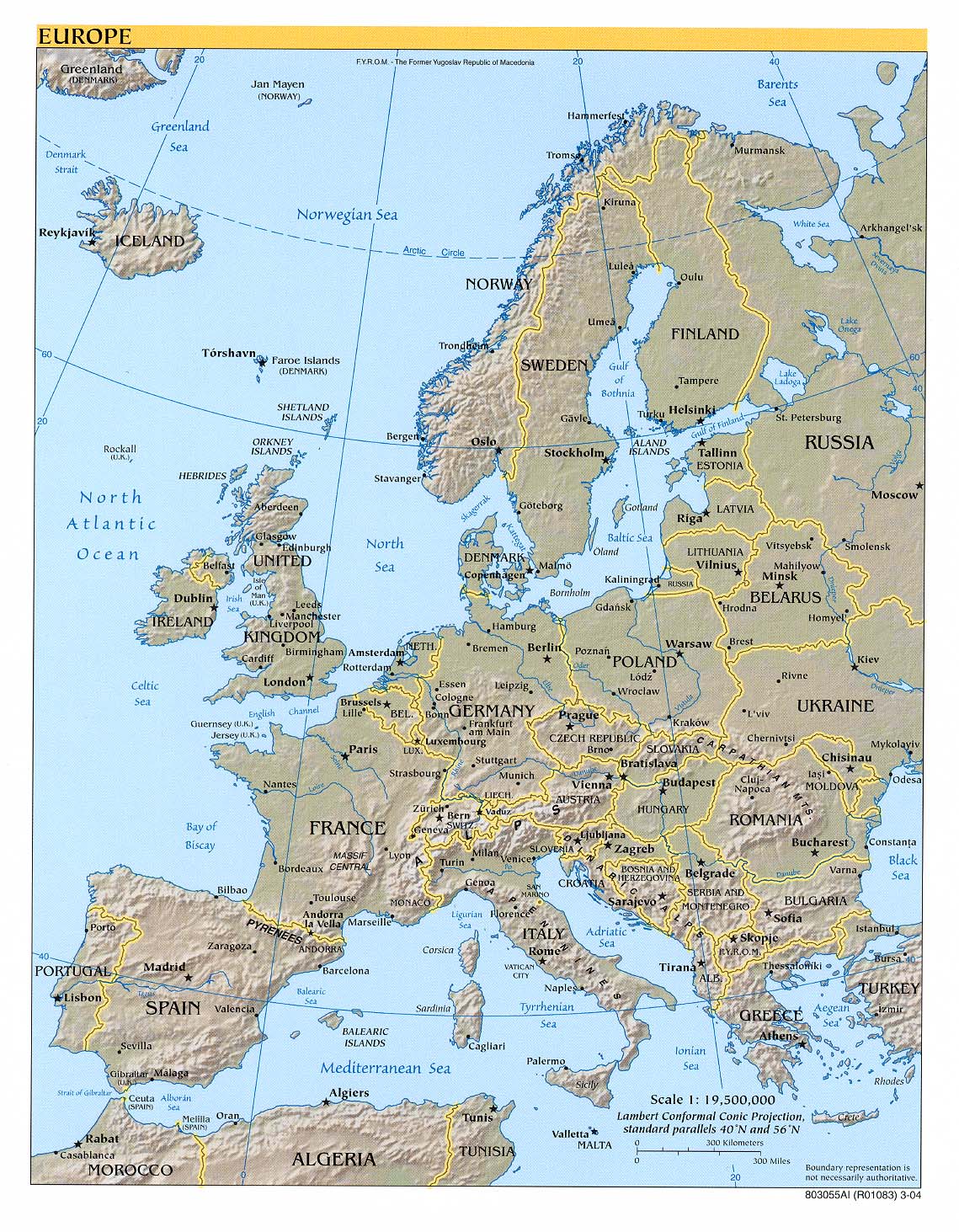
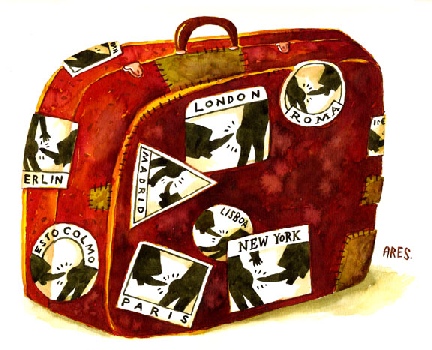
Destination:Europe


Tips for making your trip stay fun and safe

I’ve come across lots of teens who dream of traveling to Europe, but I haven’t really seen many who actually gather the courage and start planning their trip, and even less who DID take off. I thought that, as I have made this trip myself, maybe my advice will help the dreamers.


  • First of all, decide who you’re traveling with. It must be someone you’re really comfortable with, because having a discussion with your partner while you’re away isn’t only discouraging, I’ll even say it’s extremely dangerous!
  • Also think of how long you will be away. Traveling to Europe for less than too weeks is pointless.
  • Once these matters are settled, start by getting your paperwork ready three months in advance: apart from the passport and booking for tickets and accommodation, you may need a tourist visa, health insurance or an international driver’s license.
  • While you’re preparing your itinerary, keep in mind that you’ll want to take your time to walk the streets, shop, eat and rest. That’s why visiting too many cities in a short period of time is definitely a bad idea.
  • Then there is the accommodation problem. You have a broad choice of hotels, hostels, camping sites… On the Internet, look for pictures of what each of them looks like, and based on that, choose the option you prefer. Just remember to make reservations in advance.
  • If you aren’t on a guided tour, speaking the local language is recommended. The market offers tourist phrasebooks which may be useful. Some of them have advice on good restaurants and hotels, and even a short introduction on the culture and history of the country you’re visiting.
  • If you’re planning to rent a car, make sure your driver’s license is valid where you’re going, otherwise you’ll need an international one, and that the driving rules are the same as they are in Argentina. For example, British people drive on their left instead of their right.
  • Another cheap option is traveling by train. Look for student rail passes.
  • How will you communicate with friends and family in Argentina? Here again you’re free to choose: global cell phones, wifi, cyber cafes, telephone cabins or international telephone cards that’ll make things cheaper for you.
  • Well-packing is difficult: you don’t have to take too many clothes, you don’t have to take too little. Prioritize comfort over fashion, and remember to check the weather on the Internet, even though it’s likely to change.
  • On D-Day, try to get to the airport several hours earlier, and respect the security regulations. Don’t be nervous on the plane and enjoy your flight.
  • Finally, once on destination, of course you shouldn’t forget the typical touristic places, but if you have some spare time, dare to go eating at a tiny, regional restaurant; or to get lost in a small village. This will help you know the culture much better. Some of these small villages, for instance, may be forgotten medieval pearls, and the pleasure of discovering them is beyond compare.

I know some of this advice may sound obvious, or maybe you’ve heard it somewhere else, but it’s always good to remember all this, so you won’t be surprised by any unexpected situation.
I WISH YOU LUCK ON YOUR TRIP!!!

Trash Project

by Daniela Calvo and Adolfina Paz
Every year in our school 3rd polimodal students have a subject called Project. Teachers Silvia Bartolucci, Silvina De Negri, Jane Yocca, Alejandra Yanotti and María Marta Albornoz, have decided to do something related to environmental issues and they have started “Trash Project”.
For the last three years students and teachers have been doing a lot of research. They have learnt a lot about the contamination problem and they chose Tafí del Valle as the place the project would be implemented because it is a very nice place, which is visited every year by a lot of foreign people and you are constantly in contact with nature.
This year, the class of 2008 have also done some research about pollution, trash, recycling, and everything related to this issue, as the other students did. Through this we have learnt what trash classification is.
There are two kinds of trash. One is the wet trash that includes food and everything that contaminates the other kind of trash, the dry one, which includes both recyclable and non recyclable materials such as plastic, glass, metal, paper and cardboard. These materials are processed so they can be sold to be reused. This way the amount of trash that is thrown away, burned or buried will be reduced. That is why the aim of this project is to create special dustbins called ecological islands which are different compartments to put the trash in dividing it in the two types. In this way we can do everything simpler so that rubbish can be separated into the wet one to make compost or to recycle. There is also another dustbin for used batteries that are very contaminating because they are made of toxic chemicals, and 30% of their content has substances that can damage health and environment.
In our class we are divided into three groups. The first one has to make a short video, in order to make people realise how dangerous the situation about pollution is nowadays and encourage them to do something to change this. The second one is in charge of making the special dustbins. They have to present a model and this has to be supervised by the teachers. After this, they are provided with the necessary materials and the students have to build them. And the last group has to do a campaign for different kind of people, considering age and social class to make them think about this problem and collaborate with us. To make this possible, we went to Tafí del Valle and saw how they work with garbage in the recycling plant situated in El Mollar. The man in charge of this plant is Mr. Zonca and he explained to us how the plant works, and showed us the way trash is classified. He told us that the recycling plant in El Mollar has been working since 2003. It was given by the Alumbrera Mine in compensation for the visual contamination they had caused in Tafí del Valle. This plant does not receive any help from the government. Mr Zonca said that the job they do in the plant is not well paid so they do it only to help with a solution to the contamination problem. While talking about this, he added that during the year, the amount of rubbish produced in both Tafí del Valle and El Mollar is of three tons, but in summer, especially in January, this amount rises to twenty tons.
Mr. Zonca also told us that the main cause of the problem of rubbish contamination is the wet trash. The other materials, such as plastic, cardboard, glass and paper are processed in the plant and then sold at low prices. The rest of the trash, the one that is not sold or recycled is used to make compost, or is buried in places called sanitary landfills, which are located far away from population and the land has to be previously studied. After Mr. Zonca finished his explanation, we went to see the plant and we saw how the workers manipulate the trash that arrived at the plant.
After this visit to the plant, we were divided in groups and cleaned the sides of the rute that joins El Mollar and Tafí del Valle. We collected fifty bags full of rubbish and there was more left. We realised the serious problem of contamination because people do not care about the environment and they are not conscious of the damage they provoke.
We are very enthusiastic about this because it is a very good way to have an active participation in the community and we feel that we are helping a little but efficiently to preserve the environment.


Monday, May 12, 2008

Review: Shakespeare For Managers


I got Shakespeare for Managers by Rolf Breitenstein as a present and at first I thought it was a book for people interested in being a manager, investor or something related. To my surprise, the book could be read by any ordinary reader who definitely does not have to have any knowledge of Shakespeare or business.
At first the book talks about Shakespeare, his achievements as a playwright, and compares him with today’s investors, economists, CEOs, etc. For example Shakespeare had 10% of the Globe’s income, the theater he worked in, he bought land and properties in different places of England, he risked his career by making different kinds of plays the English were not accustomed to.

Later on there is an analysis of twelve of Shakespeare’s plays which focus on the behaviour of the characters (their characteristics, their strengths and weaknesses), also on the situation each one experiences. This is directly compared with a firm or company where every character plays its role according to their position, e.g. a king is today’s chief executive officer. All of this can be used as a guide or introduction to the business world, and also to Shakespeare’s because you get to know his style, the topics he wrote about which touch on many aspects of life, such as love, hate, death, friendship, doubt,
patience, among others.
In the last few pages there are interesting summaries of his 37 plays (which have no comment on business matters). These are ordered into tragedies and comedies, which are chronologically arranged and the histories, which follow a true historical order; Breitenstein considers that Shakespeare’s plays are too long and summaries are extremely useful, quoting “brevity is the soul of wit”.
There are also three of the most famous speeches “To be or no to be” from Hamlet, “Quality of mercy” from The Merchant of Venice and “All the world’s a stage” from As You Like It. These are very clever speeches, which are written eloquently and have huge power of language, rich in metaphors and other literary devices.
The book is original and practical, also comic, because of the informal analysis, and the alternative endings the author gives to most of the stories. These are usually short; they show that if something or someone had acted differently or if technology had existed in Shakespeare’s plays, the outcome would have been different.
I had never read anything about Shakespeare before, and with just a few lines and phrases it has opened my mind to another world. The whole idea of the book derives from the quote “To buy or not to buy: that is the question”, which summarizes the manager topic with ‘Hamlet’s’ most profound soliloquy. When reading the book, you get to compare different opinions, conclusions and points of view on the same topic, and that way you get a general meaning of Shakespeare’s works.


Pablo Craig

Sunday, May 11, 2008

Let's keep it clean!

Garbage everywhere. That’s the first thing you see when you arrive in Tucumán. But why? The garbage collector picks it up every day, maybe there aren’t enough dustbins in the city or people don’t care about keeping the place where they live clean. Well… it’s true, there aren’t enough dustbins in the province. Now, downtown, there are dustbins on every street and corner, but citizens don’t seem to use them. 400 tons of garbage are thrown every day. What can we do to improve this situation and to stop producing such amounts of garbage?

In our school, we are organizing a classifying garbage project to find a solution to the huge amounts of trash thrown daily. When we were told about it, I was surprised and worried, because how are we going to make people classify their garbage, if they don’t throw it in the dustbins, or worst, we don’t classify it in our own school or use the dustbins either.

There are dustbins in the classrooms, fields, bathrooms, in the cafeteria, everywhere, but still, our school is full of trash in every corner. The janitors sweep the candy wrappings and bottles thrown on the grass before every break, when the recess is over, everything is dirty again. Why can’t our school be clean for more than three hours?

I sat in our school’s cafeteria and watched the students. I found: out of five students, only three threw their rubbish in the dustbin. The other two, when I told them they had dropped a paper, continued walking or answered the janitor would clean it later, because it was his/her job. I spent the whole afternoon thinking this situation is absurd and that students don’t care about keeping clean the place where they spend a big part of their day. It’s OUR job to keep the school clean, we can’t expect having people cleaning after ourselves all the time. To avoid our school from looking like a dumpster, we can start using the dustbins, which are essential, and then maybe we can classify our trash, so that we can help with the school’s project; and we can get used to this and practice the garbage classifying in our homes, and at the same time to create a habit for cleanness.

We went to Tafí Del Valle with our project teachers. After visiting a plant where garbage is classified, we were told to clean the route to Tafí. So, we made three or four groups with ten to twelve students each. When we were given plastic bags and gloves we started the assignment. The place seemed clean, but it wasn’t. It was hard work to clean it. And while we were doing it, a driver rolled down the window of his car and threw a piece of paper, we were cleaning and he kept contaminating. He saw us and he didn’t care. We filled all the plastic bags and we couldn’t fish, there weren’t enough bags for us to clean all the garbage.

These examples show there are lots of ways to improve our life style. But if we want to change, we just have to start somehow. When I see someone throw garbage anywhere but in a dustbin I let that person know. And that’s what we should do, so we can become aware and then, change our habits; it’s not that hard to get used to clean, and it is very nice to live in a clean place too. Plus there are lots of things to be done and help keeping the place where we live dirt free. We can start using the dustbins, and then maybe even classify our wastes and stop producing such amounts of it.


These pictures were taken in our school, they clearly show it’s full of trash in every corner.


These are pictures of one of the groups cleaning the route to Tafí.


This is where we had to clean, it looks clean, but it was full of garbage.


By:
Luciana Arena, 3rd polimodal


For more information about the school project read the article written by Adolfina Paz and Daniela Calvo.

Saturday, April 26, 2008

San Patricio group in Facebook

Anita de la Peña has opened a San Patricio - Tucuman group in Facebook! And it already has about a 100 members! You can join this group at http://www.facebook.com/group.php?gid=30642011272
You may be surprised to find your old buddies there! If you haven't yet, join Facebook at http://www.facebook.com
Enjoy!
(Thank you, Anita!)

Tuesday, March 18, 2008

Guido Mossé en La Gaceta


El profesor Guido Mossé, junto con otros editores de revistas culturales, opina sobre la escritura de los blogs en La Gaceta del Lunes 17 de Marzo de 2008

Información General


REVISTAS CULTURALES

La persistencia del papel, en tiempos del blog

Muchas publicaciones en formato tradicional que circulan en Tucumán parecen tener una función social.

En la era de la blogósfera todavía hay quienes eligen la textura del papel modesto y los formatos editoriales tradicionales (la revista a dos colores, el mural o la hojuela ascética con aparente “cero diseño”) como medios para canalizar sus producciones de narrativa, de poesía, de ensayo, o, simplemente, de catarsis. Como afirma Soledad Martínez Zuccardi en su análisis sobre la primera mitad del siglo XX, las revistas culturales son escenarios fundamentales de la vida intelectual moderna.
Un siglo después, internet mediante, vale preguntarse si los escritos de las nuevas camadas siguen cumpliendo la misma función: si los guía el deseo de experimentar nuevas estéticas; o si lo que los anima son, simplemente, “las ganas de decir”.
En esa búsqueda, LA GACETA reunió a cinco responsables de cuatro publicaciones que fueron gestadas en el ámbito de la Facultad de Filosofía y Letras de la UNT, Guido Mossé (La Hoja), Daniel Ocaranza (Escapulario), Daniel Casas (revista Seta), Verónica Daud y Mariela Casanova (revista Yucumanita). También dio su aporte vía e-mail, desde España, Irene Benito, la obstinada hacedora de “Dixi”.
En esta crónica no aparecen revistas culturales más “profesionalizadas”, como la flamante “Mil trescientos kilómetros. Escrituras desde la frontera” o la publicación digital “Telar”, que dirige la doctora Carmen Perilli (ver sitio www.unt.edu.ar, link revistas digitales), entre otras publicaciones que editan intelectuales tucumanos de la generación intermedia.
A propósito de las revistas realizadas por jóvenes tucumanos, una investigación de “Dixi” de 2006 indicaba la existencia de alrededor de 15 publicaciones independientes (entre culturales y de espectáculos). El perfil de la mayoría de esas publicaciones es decididamente artesanal y no persigue rentabilidad. Según Verónica Daud, muchas de esas revistas han dejado de circular en estos últimos años “por la imposibilidad de sostenerlas económicamente”.
Sin embargo, en el mismo período se han multiplicado los blogs escritos por jóvenes tucumanos provenientes de distintas disciplinas. Si el blog aparece como un espacio de expresión en el que numerosos individuos se vinculan en red desde la soledad de sus computadoras, muchas de las revistas culturales en papel que circulan en Tucumán, en 2008, parecen mantener una función más social que estética.
A la virtualidad de la red, las publicaciones gráficas no sólo le oponen la “materialidad” del papel, sino que, una vez editadas, circulan por los contados pero concurridísimos cafés literarios de Tucumán. En apoyo de esa percepción, opina Guido Mossé : “Nosotros priorizamos los vínculos, el lenguaje como vía de expresión, más que la búsqueda propiamente estética”.
“Todo estudiante de Letras busca no sólo escribir, sino darse a conocer”, añade Daniel Ocaranza, responsable de la hoja mural “Escapulario”, que se “edita” en las paredes de la Facultad de Filosofía y Letras “cada vez que se junta material”.
Mossé produce “La Hoja”, una hoja estrictamente literaria hecha en papel de resma que lleva 45 números en la calle y que se distribuye en las facultades del parque 9 de Julio y en las de la Ex Quinta Agronómica. “Hoy está más que nunca la necesidad de escribir y de decir cosas. Y no sólo escribe la gente de Letras. El poder de la palabra escrita - reflexiona- es determinante. Yo enseño en colegios y veo que los chicos hacen sus blogs, sus metroflogs, y usan otros recursos. Ahí está la creatividad, el poder de la escritura, con códigos diferentes de los hegemónicos, aunque desde la facultad se diga que ha habido un empobrecimiento del lenguaje”.
Daniel Casas edita “Seta” con otros tres amigos. Dice que no quisieron buscar patrocinios institucionales porque querían trabajar con libertad. Sin embargo, cuenta que la revista tuvo tan buena acogida que las autoridades de Filosofía y Letras apoyarán la edición.
Lo mismo les pasa a las chicas de Yucumanita (voz quichua de Tucumán), que ya tiene ocho años de vida, y cuyo objetivo es “hacer valer el derecho a la cultura”. En la revista hay un 50% de producción de los profesores, y un 50% de los estudiantes, y también tienen apoyo de las autoridades de Filosofía y Letras.
Yucumanita también está en la web (www.unt.filo.edu. ar, link “revistas digitales”), edita un CD, un video y organiza un concurso que, según sus responsables, es un termómetro de esta “fiebre de escritura”. En los concursos de cuento y poesía que organiza Yucumanita, dicen, se presentan hasta amas de casa.

Escribir y corregir
Un punto que propicia debate entre algunos editores es el de la calidad estética del material que se publica. Como ya se dijo, ellos priorizan “el espacio de vínculo, por sobre la estética, que suele ser la que se impone desde el discurso hegemónico”.
Sin embargo, la profesora Rossana Nofal, que está a cargo de la materia “Taller de escritura” en la facultad de Filosofía y Letras, opina que a veces esas posiciones enmascaran cierta carencia de autocrítica. “El primer debate (en torno del flamante espacio de taller) tiene que ver con instalar la idea de una escritura y su corrección. Un texto que se produce, se confronta con otros y se vuelve a pensar. Confrontar y tomar riesgos: hablamos de una escritura pautada. Los chicos -afirma Nofal- escriben al ritmo de propuestas determinadas y con el vértigo de tener que tomar decisiones inmediatas sobre una hoja en blanco. La consideración de la escritura como trabajo supone prácticas activas, con posibilidad de distancia crítica, debates y proyección hacia el futuro de esa producción, componentes indispensables para considerar la relación entre la escritura propia y la de los otros”. Una manera de mezclar la fiebre con la técnica.


De: http://www.lagaceta.com.ar/vernotae.asp?id_nota=262561&titulo=La%20persistencia%20del%20papel,%20en%20tiempos%20del%20blog

Monday, March 17, 2008

St. Patrick's Ceremony 2008


The cloudy day seemed just right for this year's ceremony in which the school celebrates our students' success in international examinations. Several students from the Class of 2007 were back and after the religious service led by Father Gomez Aranda and a speech by Prof. Jane Yocca, the certificates and diplomas of IB, FCE and CAE were given to the Class of 2007, 2008 and 2009.


Sunday, March 9, 2008

Poesía


Comparto con ustedes este hermoso poema que me leyeron alguna vez...

Presten atención al título, que es lo que le da sentido y gracia!


LOPE DE VEGA

Soneto de repente

Un soneto me manda hacer Violante,
que en mi vida me he visto en tal aprieto;
catorce versos dicen que es soneto,
burla burlando van los tres delante.
·
Yo pensé que no hallara consonante,
y estoy a la mitad de otro cuarteto;
mas si me veo en el primer terceto,
no hay cosa en los cuartetos que espante.
·
Por el primer terceto voy entrando,
y aun parece que entré con pie derecho,
pues fin con este verso le voy dando.
·
Ya estoy en el segundo, y aun sospecho
que estoy los trece versos acabando:
contad si son catorce, y está hecho.

"Los titanes de la poesía universal" - pág 493


.
Dedicado a Laurita Carracedo, para que considere como una opción su análisis en clase! Un beso enorme Lauri!!!

Saturday, March 8, 2008

Egresado '90


A PEDIDO DE MI PRIMA VALENTINA BECKER Y DE MI RIVAL Y AMIGO DE TENIS PROFE CARLOS LIZARRAGA ESCRIBO UNAS BREVES PALABRAS PARA EL BLOG DEL COLEGIO.

PRIMERO QUERIA FELICITARLOS A LOS CREADORES DE ESTE BLOG QUE ESTA MUY BUENO. (EN NUESTRA ÉPOCA DEL COLEGIO NO HABIA TANTA TECNOLOGIA)

SEGUNDO CONTARLES QUE LLEVAMOS MI PROMOCIÓN Y YO (LA SEGUNDA PROMOCION) 17 AÑOS DE EGRESADOS YA QUE NOS RECIBIMOS EN EL AÑO 1990.

ME RECIBI DE ABOGADO EN EL AÑO 1998 Y EJERZO LA PROFESION DESDE ESA FECHA. ESTOY CASADO CON LUCIANA MÜLLER Y TENEMOS UNA HIJA HERMOSA QUE ACABA DE CUMPLIR UN AÑO Y SE LLAMA CONSUELO.

AL COLEGIO LO RECUERDO CON MUCHISIMO CARIÑO. FUE MUY ESPECIAL YA QUE CRECIAMOS A LA PAR DEL COLEGIO. QUE ERA NUEVO. MAS CHICO Y TE PERMITÍA CONOCER MÁS A TODOS LOS INTEGRANTES (ALUMNOS, PROFESORES, CONSERJES, DUEÑAS, ETC.)

SI LAS POSIBILIDADES ECONOMICAS LO PERMITEN Y MI MUJER ESTA DE ACUERDO, NO TENDRÉ DUDAS EN ENVIAR MIS HIJOS A QUE SE EDUQUEN EN SAN PATRICIO.

UN BESO GRANDE.

RUY PAEZ DE LA TORRE '90

Tuesday, March 4, 2008

DEPARTAMENTO DE EDUACIÓN FÍSICA

Inscripción en Talleres de Deportes
A partir de este momento, los alumnos de 1ro, 2do y 3ro Polimodal se podrán inscribir en un taller de deportes para el primer cuatrimestre del año. Solamente se admitirá hasta 30 estudiantes por taller y se inscribirá por riguroso orden de llegada. Una vez cubierto el cupo de 30, los que se hayan inscripto después del 30° lugar, serán asignados por los profesores a otro taller donde hubiera espacio. Habrá seis (6) talleres disponibles:
VARONES:
1. Fútbol Cadetes (Nacidos en 1992 y 1993)
2. Fútbol Juveniles (Nacidos en 1989, 1990 y 1991)
3. Volleyball
MUJERES:
4. Volleyball
5. Softball
6. Hockey

CÓMO INSCRIBIRSE
Deberán hacerlo a través de este blog siguiendo estos tres simples pasos:
1) Llevar el cursor hasta el final de este texto y clickear sobre la palabra “comment”. Se abrirá una ventana con un espacio donde se puede escribir el comentario. En este espacio deberás escribir la siguiente información:
(Tu NOMBRE completo)
(Tu FECHA DE NACIMIENTO –día/mes/año)
(El TALLER de tu elección)
(Tu CORREO ELECTRONICO)

Por ejemplo:
Juan Adalberto Olarticoechea
3/5/93
Fútbol Cadetes
jaolarticoechea@hotmail.com

Por favor, para facilitar el registro, no dejar ningún otro comentario extra. Por dudas o preguntas deberán recurrir directamente a los profesores de Educación Física.

2) Una vez escritos estos datos, ir hasta el pie de la ventana y elegir la opción “Anonymous”. Esto facilitará el trámite sin tener que escribir contraseñas de ningún tipo.

3) Clickear “Publish your comment” en el recuadro naranja al pie de la ventana. Tu comentario será moderado antes de aparecer en el blog por lo tanto no lo podrás ver publicado inmediatamente.

Si te apuras, podrás inscribirte en el taller de tu elección!

Sunday, March 2, 2008

In the News

Gaston Ugarte Bollini '96 Succeeds as Cartoonist and Tech Wiz

Source: La Gaceta, March 2, 2008

In its Sunday Showbiz section of March 2, La Gaceta dedicated two full pages to Gaston Ugarte Bollini's work as a cartoonist and "digital sculptor" in one of the most renown companies that produce animated films, Pixar, US. Gaston graduated from SanPa in 1996 and his talent and vocation were already apparent in the caricatures of teachers (one of myself!) he published in the school magazine of the time. Below please find two of the articles just published. Congratulations, Gaston! We're all so proud of you!


ESPECTACULOS
Un tucumano en Pixar

El tucumano que trabaja en los estudios Pixar habló con LA GACETA, y contó cómo se trabaja una gran película como “Ratatouille”, que acaba de ganar un Oscar.

Gastón Ugarte Bollini se fue hace poco más de 10 años de la provincia y se instaló en California. Egresado del Colegio San Patricio, casado y con un bebé, hoy trabaja en esa fábrica de sueños que es la la Pixar Animation Studios. El domingo -junto a sus compañeros-, vio toda la ceremonia del Oscar por televisión, y luego vinieron los festejos; incluso, el lunes por la tarde se repitieron los brindis en el moderno edificio ubicado en Emeryville.

Y no era para menos. “Ratatouille”, el filme del ratoncito chef, que hizo las delicias de niños y adultos en todas las salas del mundo, había ganado la estatuilla como Mejor Película de Animación. Pixar es dueña también de otros éxitos como “Toy Story” (1995), “Monster, Inc.” (2001), “Buscando a Nemo” (2003), “Los increíbles” (2004) y “Cars” (2006).

El cargo de Gastón se llama Technical Director/ Modeling, pero él, para que se entienda mejor cuál es su labor, señala que es un “escultor digital”. “Mi especialización es en modelaje; estoy encargado de construir todo lo que se ve en la pantalla, desde los personajes a los sets y todo utensilio que sea utilizado por los personajes. Se podría decir que soy un escultor digital”, le responde a LA GACETA en una entrevista a través del correo electrónico.

Ugarte Bollini tiene 29 años. Antes de ingresar a los estudios Pixar, pasó por otro llamado Charlex, en Nueva York, donde trabajó en comerciales en 3D y en un cortometraje denominado “One Rat Short”. Su paso posterior fue en Sony Pictures Imageworks, donde tuvo la “suerte” -así la llama él- de trabajar en películas como “Reyes de las Olas” y en la realización de ciencia ficción, “Soy leyenda”, protagonizada por Will Smith.

“Estados Unidos tiene la mayor oferta académica en lo que yo quería hacer. Estudie animación en computación en Florida, en el Ringling College of Art and Design, y me recibí con un BAF (Bachelor in Fine Arts), un bachiller en bellas artes”, dice Ugarte Bollini, quien recuerda además su paso por la Facultad de Arquitectura de la UNT.

Source: La Gaceta, March 2, 2008

- Cuando vos decís escultor digital, ¿a qué te referís concretamente?

- En el modelaje, que es mi especialización, esculpo digitalmente todo lo que se ve en la pantalla. Usamos diversos programas de 3D para modelar las películas, entre ellos, Maya, Mudboz, Zbrush y muchos otros escritos dentro de la empresa. Las películas pasan por tres etapas: la preproducción, la producción y la postproducción. Yo trabajo en la producción, en la construcción de la geometría, la cual pasa luego a los articuladores. Estos preparan los personajes y generan toda la articulación que permite, después, que los animadores puedan mover los personajes a su gusto y darles vida. Posteriormente vienen los texturadores, que le dan look a las distintas superficies, y, cuando las escenas ya están animadas, la secuencia pasa a los iluminadores y a los editores. En la postproducción se pulen detalles básicamente, y se asegura que todo esté en orden, y que la película tenga el look final planteado desde el inicio.

- ¿Cuánta gente intervino en “Ratatouille” y qué tiempo exige?

-Generalmente nos lleva alrededor de 4 años, desde que se comienza hasta el final. Y durante ese tiempo, alrededor de 250 artistas llegan a participar, en las distintas etapas. Pero en la etapa específica de producción, no lleva más de un año y medio, por lo general. Esa película fue especial, además, porque hubo cambio de dirección en las etapas iniciales, lo cual provocó una demora mayor a la común.

- Desde un punto de vista profesional, ¿dirías que “Ratatouille” es pura tecnología?

-El mundo de la animación evolucionó, pero esto no significa que la tecnología esté matando al arte tradicional. Al contrario. Todo lo que se ve en la pantalla fue cuidadosamente construido, pintado, iluminado y finalmente animado por talentosos artistas. Todos acá nos consideramos artistas digitales. Muchos, con gran devoción técnica, otros, más inclinados hacia el arte. Pero todos con el objetivo común de crear películas memorables. No únicamente por la historia, sino también desde un aspecto visual, artístico. Toda idea comienza en papel. Y va evolucionando desde ahí.

- ¿Pero no hay abuso de esa tecnología en “Ratatouille”?

-“Ratatouille”, como todas nuestras películas, es 100% digital, pero durante las diversas etapas de la producción, hay muchísimo arte producido para encontrar el look de la película. Dibujos, pinturas, esculturas en arcilla y bosquejos. Quiero reiterar que todo comienza con una idea, el papel y el lápiz.

El respaldo de la familia

“Mi familia siempre estuvo muy atada al arte, y desde muy chico siempre me gustó dibujar. Me pasaba horas haciéndolo, viendo dibujitos y películas animadas. Tanto mis papás como como mi abuela siempre me incentivaron a que continúe; así fue cómo empezó todo”, señala Gastón Ugarte Bollini. “Cuando terminé el secundario y llegó el momento de decidir qué carrera seguir, siempre supe que tenía que ser algo relacionado con la animación y el cine”, agregó.

“Gastón era caricaturista desde los 4 años; observábamos que dibujaba un poco raro. Cuando le contamos a un artista amigo (Gerardo Ramos Gucemas), nos aconsejó que lo estimuláramos mucho, porque el tenía una condición innata”, le dijo a LA GACETA su madre, Mónica Bollini. “Me acuerdo cuando iba a tercer grado, y para el Día de la Bandera, tenía que hacer un dibujo. Y a Manuel Belgrano y su caballo, los caricaturizó; la verdad es que tuvimos que dar explicaciones pero en la escuela entendieron”, rememora.

La abuela, Olga Zaccardi de Bollini, pinta desde hace más de 30 años.


ir arriba